
The CS2 vs VALORANT debate has been ongoing ever since Riot Games launched its tactical shooter. While both titles adopt a 5v5 bomb-defuse format, they take vastly different approaches to gameplay. CS2 favors raw mechanics and VALORANT’s agent abilities add an extra strategic layer to every round.
Because of this, determining which game is tougher goes beyond just aim. To answer that question, we need to look beyond surface-level comparisons to determine which tactical shooter is truly harder to master.
CS2 vs. VALORANT: What Are The Main Differences?
Initially, you might think that CS2 and VALORANT are identical, but that couldn’t be further from the truth.
Indeed, both games are designed around the same round-based objective: attackers (terrorists) plant the bomb, and defenders (counter-terrorists) try to stop them. However, the real difference lies in how those rounds are actually played out.
In CS2, everyone operates on a level playing field. There are no characters with special abilities, only weapons and utility. This places a strong emphasis on fundamental mechanics such as positioning, pre-aiming, crosshair placement, and utility use. Execution is everything because everyone has access to the same toolkit.
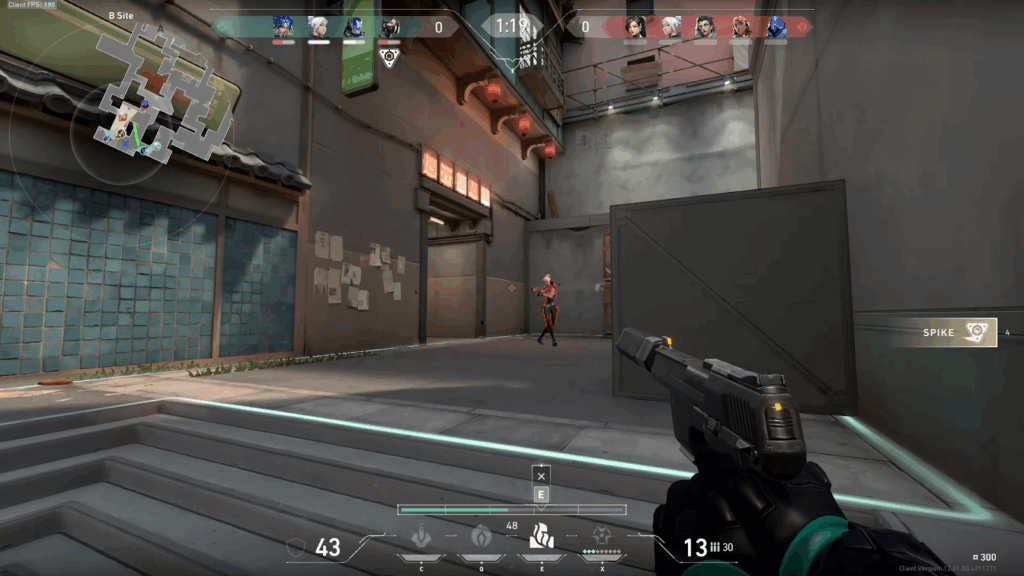
VALORANT flips that script entirely through its agent system, with each character bringing unique abilities and roles to the game. Some gather intel, while others control space, block sightlines, or initiate fights aggressively. These abilities influence how teams attack and defend a map, but also how they approach site takes and defensive setups.
Overall, CS2 leans more into raw mechanical ability, while VALORANT adds layered complexity, requiring players to track ability cooldowns and coordinate them.
CS2 vs. VALORANT: Which Has Harder Gunplay Mechanics?
While there’s no arguing that both games demand a high level of skill, there’s a huge gap when it comes to gunplay.
Most notably, CS2’s shooting mechanics are notoriously unforgiving. Weapons have fixed recoil patterns that require memorization and control, and even slight movements while firing can throw off your accuracy. To compensate, movement techniques like counter-strafing are crucial to reset your aim before taking a shot.
There’s also a constant decision-making layer in every fight. CS2 players must decide whether to commit to a spray or rely on precise first-bullet accuracy, all while operating within a fast time-to-kill environment where gunfights are often decided in milliseconds. Even tiny mistakes, like misjudging your gun’s recoil or peeking too early, can be costly.
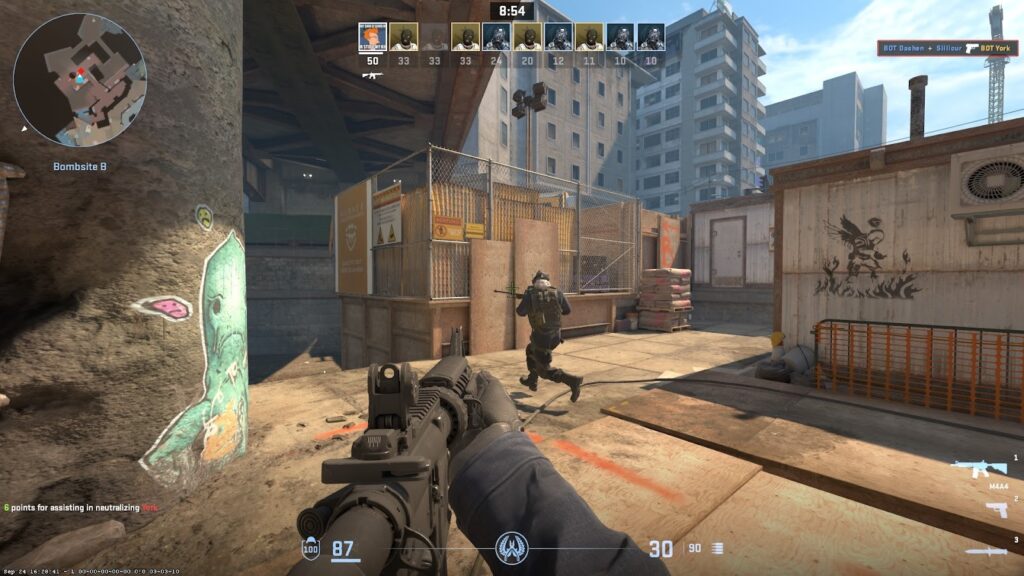
Although VALORANT also has recoil, spray patterns are randomized after the initial shots and are a bit easier to manage. There’s also a stronger emphasis on controlled bursting or tapping single shots over full sprays. More importantly, gunfights are rarely isolated and are frequently interrupted by ability usage, usually before duels even begin.
Agent abilities that can blind, block sightlines, or give away your position place less emphasis on pure aim, as players often win fights through utility advantage rather than raw mechanical skill alone. For this reason, many players consider CS2’s shooting mechanics to be tougher and significantly more demanding.
CS2 vs. VALORANT Strategy: Tactical Depth & Ability Complexity
While VALORANT is less reliant on raw mechanics, the game compensates by adding a layer of strategic complexity.
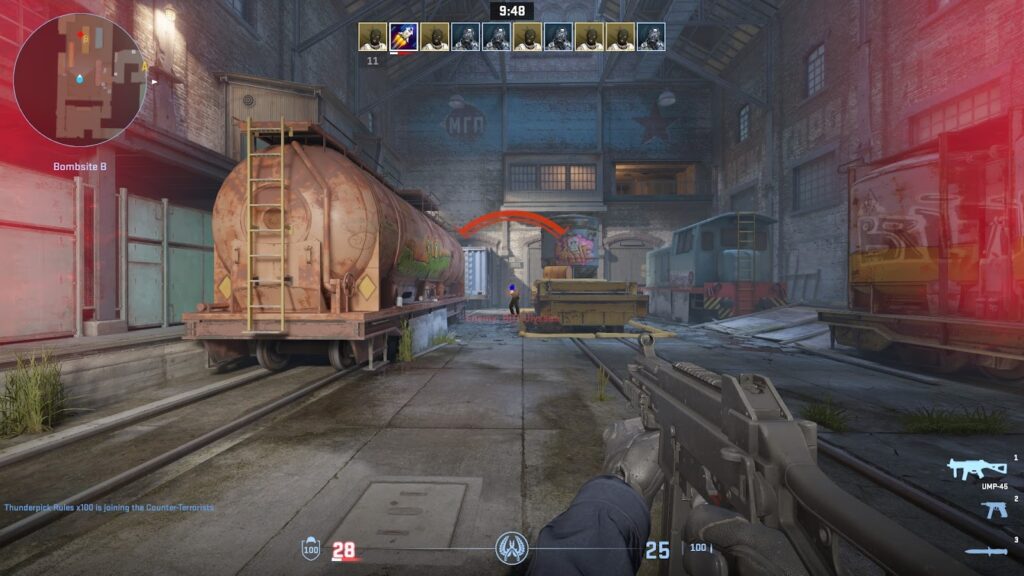
Most CS2 matches center on map control, timing, utility usage, and teamwork because players must collectively decide when to take territory or rotate. And even though well-placed smokes and flashes can open bomb sites or delay an enemy push, the tools available to players are relatively simple.
This simplicity encourages highly tactical gameplay from start to finish since everyone has access to the same nades, smokes, mollies, and flashes. As a result, strategy ultimately boils down to timing and execution.
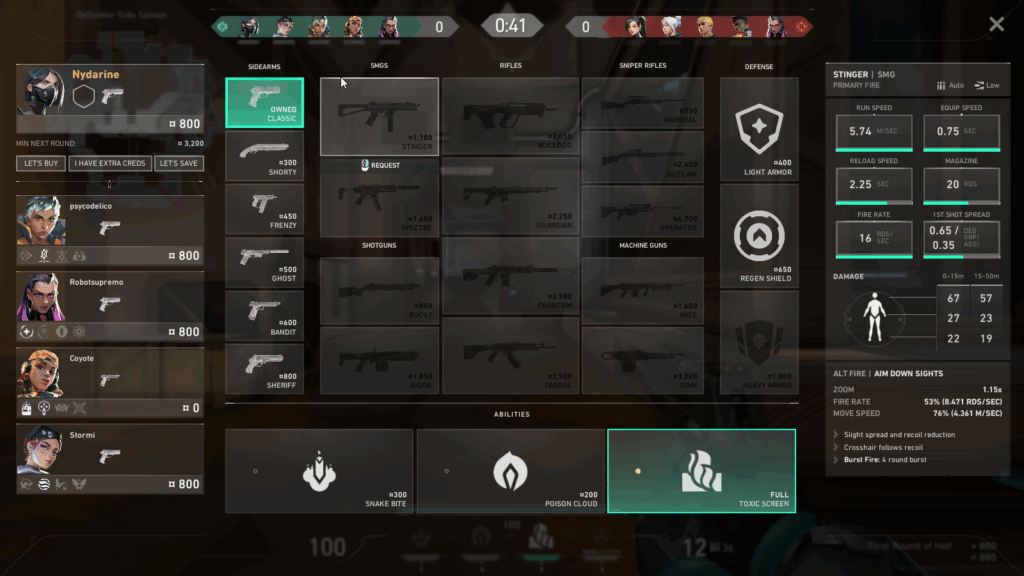
VALORANT expands on this formula in a huge way. Agent abilities introduce strategic elements that don’t exist in CS2. For example, Sova’s Recon Dart can scan an area and reveal enemy positions in real time, while Fade’s Haunt can track enemies through walls.
Beyond that, ults charge over time and offer significant advantages to help secure rounds. Clove, who is dominating ranked games, is a great example. The Not Dead Yet ult allows them to literally come back to life after being eliminated and gain a second chance in fights, turning what would be a clutch into an easy round win.
Agent abilities significantly increase the mental workload during matches, as teams must consider not only map positioning and weapon economy, but also which abilities are available, how they interact, and, most importantly, when to use them. This is even more exhausting at high Elo, where coordinated ability usage can decide rounds.
CS2 vs. VALORANT: What’s The Verdict?
The answer depends entirely on what kind of difficulty you value. As we discussed, CS2 emphasizes mechanical skills. The gunplay is unforgiving, weapon recoils require memorization, teamwork is crucial, and mistakes are punished instantly.
Meanwhile, VALORANT transforms part of that difficulty into strategy. Agents and their abilities create additional layers of decision-making that players must constantly manage throughout the match. This means you must understand how abilities work and interact across the different maps.
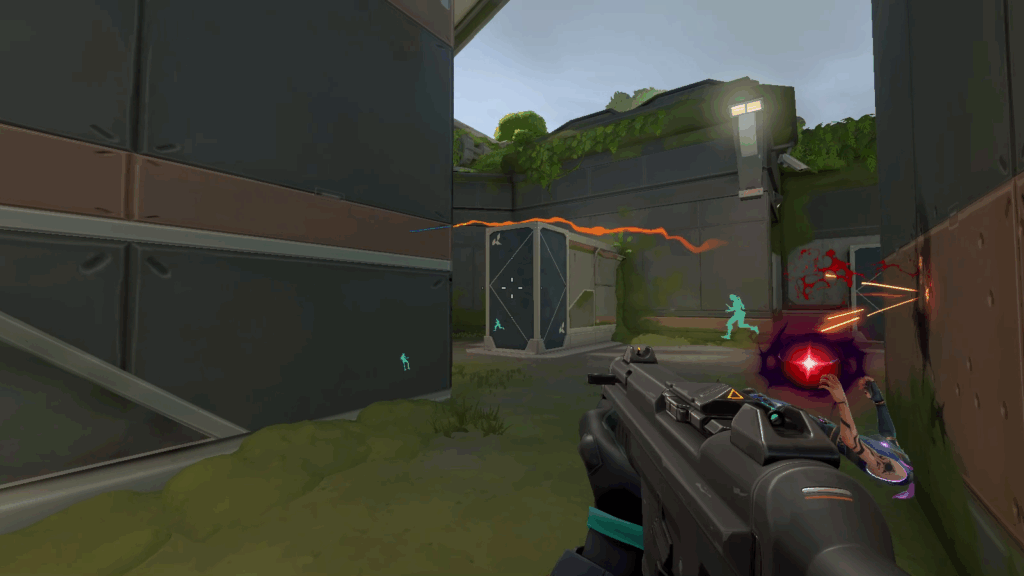
Although CS2 is conceptually simpler, the extreme mechanical mastery required to excel takes extensive practice and time to fully hone. By contrast, VALORANT is easier to pick up initially, but it becomes increasingly complex as you master the agent ecosystem and move up the ranked ladder.
Ultimately, both games push the limits of tactical FPS in their own way, and mastering either takes serious work and dedication. If you value precision and mechanical skill above all else, then CS2 might feel tougher. However, if you enjoy managing layered strategies and agent abilities, then VALORANT will have its own challenges.
Which Game Do You Think Is Harder?
No matter which game you think is tougher, both CS2 and VALORANT are great in their own right, and the same logic applies to betting.
Thunderpick is the world’s premier crypto esports betting site, providing you with all the tools you need to make the most of your game knowledge. With unbeatable odds, deep markets, generous bonuses, and exclusive promos across both titles, you’ll be well-equipped to find value in every match.
To see what we have on offer, head to the Counter-Strike 2 and VALORANT betting pages at Thunderpick and apply your skills where it really counts.
Always practice Responsible Gambling and check out our latest promo offers and boosts. T&Cs apply. 18+ to play.
