

Drafting in competitive League of Legends matches is an iconic component to the LoL esports experience. As teams over the years have developed entire meta games around strong champion picks and specific matchups that they’re trying to target, the standard draft experience became very centralised after years of iteration. Fearless Draft, after being trailed in 2025 throughout the first competitive split and First Stand 2025, was made a permanent feature for the foreseeable future for competitive League of Legends.
In this article we’ll study the League of Legends Fearless Draft and its impact on the competitive circuit, one year since it was granted the permanent status we see today.
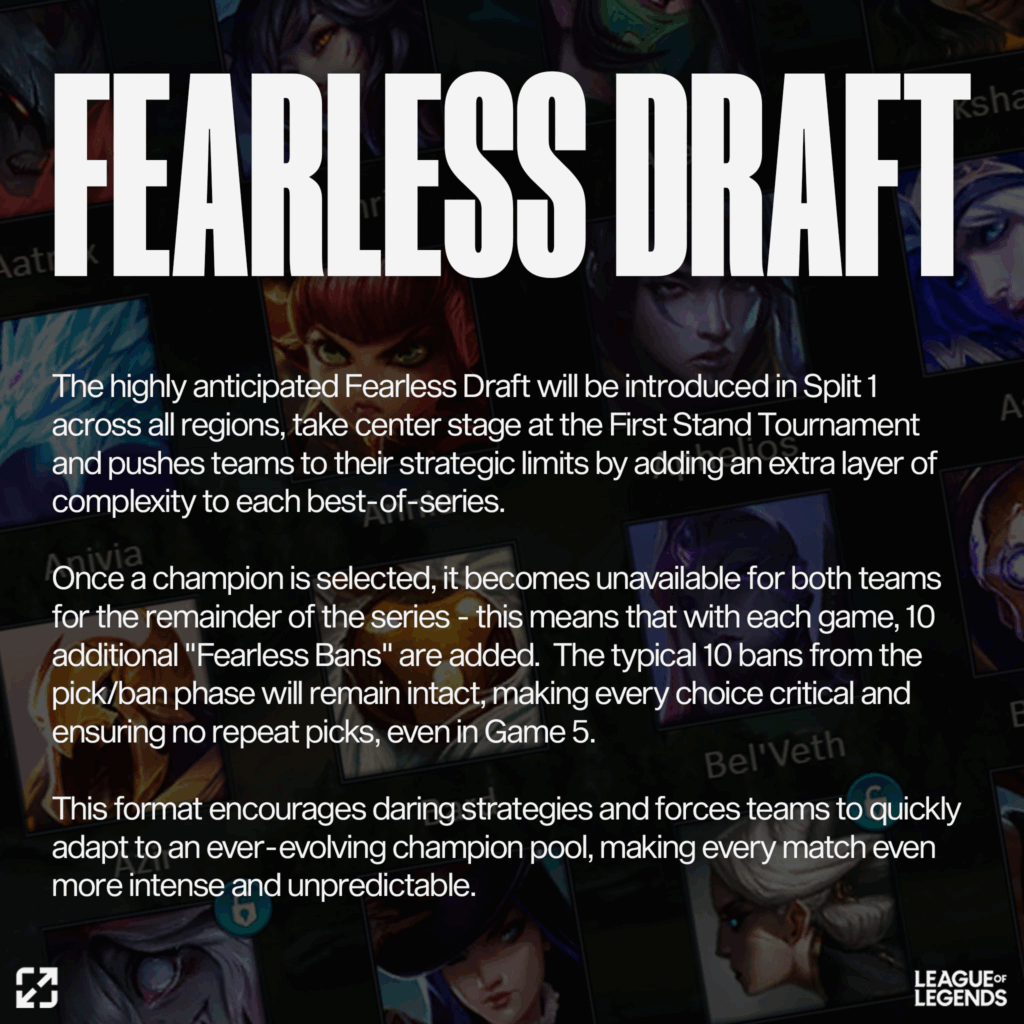
First to clear up the definition, Fearless Draft is a drafting system where characters that have been picked or banned in previous matches cannot be played in subsequent matches throughout the remainder of the series. In best-of series this increases the champion pick diversity by virtue of requiring you to have game plans for multiple drafts at different points in the series; your characters that are picked or banned in game one are unable to make a return and therefore you’ll need to have a more diverse pool of strategies to bring to a draft to contend with your opponent.
Fearless Draft forces Champion Variety
Beyond just the requirement of being able to play a significantly larger pool of Champions, the Fearless Draft system’s impact under the hood is perhaps less obvious to fans watching the games. One of the most significant changes that has stemmed from Fearless Draft is the change it makes to the practicing habits for professional teams. While playing SoloQ at a high level to maintain mechanical skills is still important, there’s no option to recreate a draft environment with a full team and coaching without scrimming.
The degrees of variation in a best of 5 series means that teams are unlikely to ever recreate exact drafts from their practice sessions during an official match, so the statistics teams are collecting to inform their coaching staff is often about when certain picks become powerful compared to others over the course of a long series.
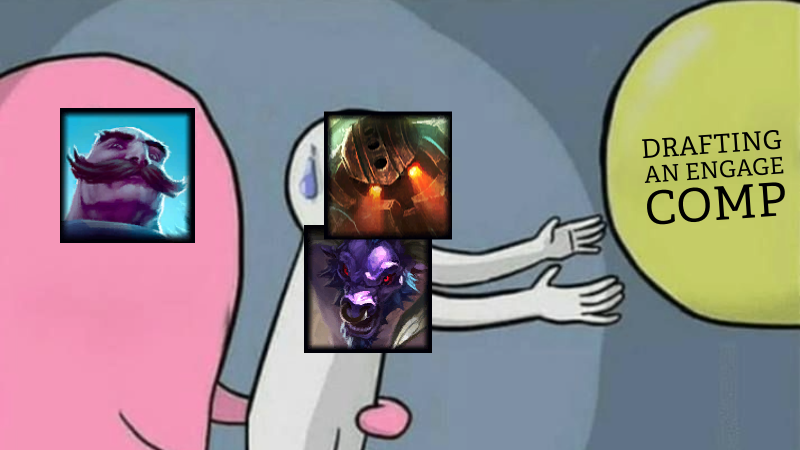
To provide an example we’re going to look at First Stand 2026 and the impact of the Fearless Draft system on a pick like Braum. All the games at First Stand 2026, including the group stages, were a part of a best of five series making this tournament a better case study for how teams must approach drafting.
There were 100 unique champions picked over the week of the event, and they ranged from must-draft threats like Orianna with a 100% win rate in 4 games and 33 bans to Corki, being never banned and picked 10 times with a 60% win rate. Braum was banned twice and picked 3 times, with a 100% win rate. Braum was picked against engaging support champions Alistar and Nautilus, where his utility in disengaging and peeling carries became the catch all counter to these kinds of engage focused picks. Fearless Draft lets a team commit to countering an engage team composition with a pick like Braum without concern for the opponents having it as a response in a later game of the series.
With Fearless Draft being here to stay across all the top flight of competitive LoL Esports competition, the impact and intricacies of the format will continue to develop. Understanding some of the fundamental components of the system will help you keep up with draft phases from here on out!