
Slot games may look simple on the surface, but every machine is designed with its own risk profile. This is where volatility comes into the equation. It dictates how the game plays, influencing how often you’ll win, how you’ll get paid out, and, ultimately, how enjoyable your spins will feel. What Does Volatility Mean In Slots?
To help you manage expectations, we’ve broken down exactly what volatility means in slots. By the end, you’ll know exactly what kind of ride to expect before you spin, making it easy to pick games that match your mood, risk, budget, and playstyle.
Table of Contents
What Is Slots Volatility?
Slot volatility (or “slot variance”) reflects the level of risk associated with a slot game. While many factors influence a slot’s volatility, most gamblers judge it by the frequency of wins and its expected payouts. Basically, it’s how often and how often a slot pays out over time.
Each machine’s volatility is inherent to its design, affecting everything from how long your bankroll lasts to how unpredictable or stable your games feel. For example, high-volatility slots tend to return larger payouts, but less frequently, whereas low-volatility slots provide smaller wins more regularly.
Some factors that are used to determine slot volatility ratings include:
- Paytable (how much each symbol combination is worth)
- Symbol distribution (how often valuable symbols appear)
- Win frequency (how often players are expected to land a winning spin)
Importantly, volatility ratings don’t guarantee results but reflect long-term statistical averages based on millions of spins. The risk level is also judged relative to other kinds of slot games, meaning what’s considered “high volatility” in one machine might only be “medium” in another.
How Slot Volatility Affects Gameplay And Your Winnings
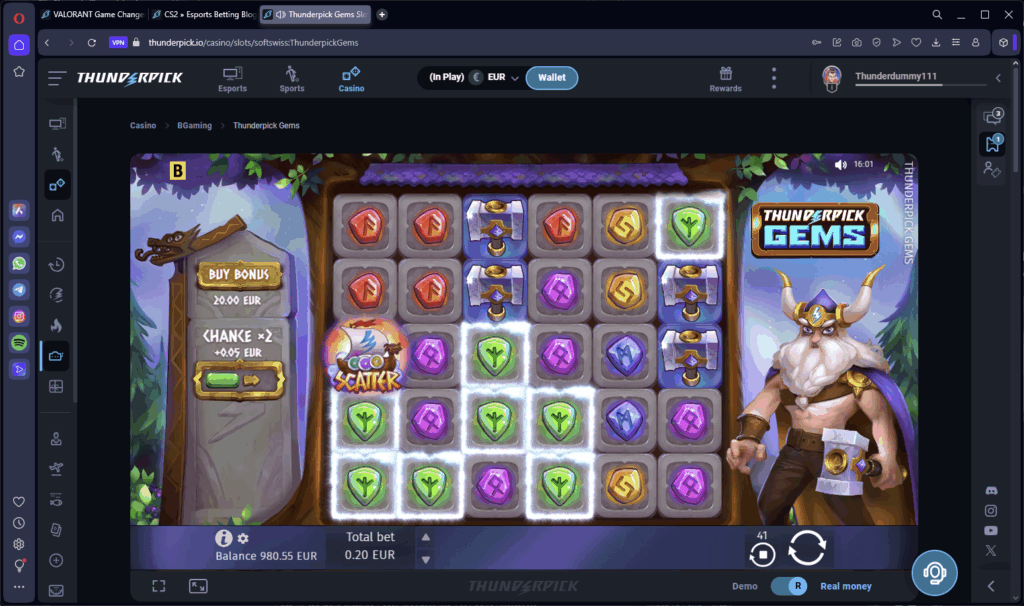
Slot volatility directly affects the ebb and flow of play, including how long your bankroll lasts, the length of your play session, and, ultimately, how exciting the experience feels.
High-volatility slots are all about the chase. The higher risk vs. reward means gamblers often have dry spells (i.e., periods of no wins) before suddenly hitting a jackpot. The opposite is true for low-volatility slots, where wins occur frequently but with smaller payouts.
If you prefer chasing big wins or enjoy the suspense, then high-volatility slots are perfect for you. However, if you’re more risk-averse or want to stretch your balance to maximize playtime, opt for low-volatility slots.
Whatever you decide, remember that volatility doesn’t change your odds, only how those odds play out. Two slots with polar opposite volatility ratings can have the same Return To Player (RTP), but the way the machine distributes wins will feel completely different.
The Five Levels Of Slot Machine Volatility
Slot machines can be categorized into five tiers, ranging from high to low volatility. This table summarizes how each level differs in risk, win frequency, payout size, ideal player type, and the bankroll you’ll need to play comfortably.
| Volatility | Risk | Frequency of Wins | Payout Size | Best Suited | Bankroll Required |
| High | Very high | Rare | Huge potential | High-risk players, jackpot chasers | Large or flexible |
| Medium-High | High | Occasional | Big, but not life-changing | Players wanting big wins with some stability | Moderate to large |
| Medium | Moderate | Steady | Balanced, decent rewards | Most players; anyone wanting variety | Moderate |
| Low-Medium | Low to moderate | Frequent | Small with occasional medium hits | Players wanting stability with mild excitement | Small to moderate |
| Low | Low | Very frequent | Small; max often capped | Budget players, beginners, casual sessions | Small |
1. High Volatility
High-volatility slots can be ruthless. Big wins don’t come often, and most payouts are smaller than your stake, rapidly draining your bankroll. The gameplay is all about patience. The real excitement comes from the chance to hit life-changing jackpots that low-volatility slots don’t offer.
2. Medium-High Volatility
Medium-high volatility slots offer sizeable jackpots, but without making every spin feel overly punishing. Make no mistake, this category of machines is still risky, but they provide enough stability to remain rewarding. They’re perfect for gamblers seeking big wins and reasonable playtime.
3. Medium Volatility
Medium-volatility slots are the middle ground of the slots world. They strike the perfect balance, offering decent wins at a steady pace. While the returns aren’t explosive, they’re appealing to most gamblers and fit nearly every playstyle.
4. Low-Medium Volatility
Low-medium volatility slots provide more cushioning for novice players. Often regarded as the “safe” option, wins are frequent, predictable, but small in scale. You won’t hit huge jackpots, but the low bankroll requirement and consistent returns mean you likely won’t experience extended loss streaks.
5. Low Volatility
Low-volatility slots are best suited to new or budget players. They deliver frequent, small payouts that are usually capped at 200-500x your bet. The smaller increment of wins means they’re very low risk and perfectly tailored to gamblers seeking longer, low-stress, and reliable sessions.
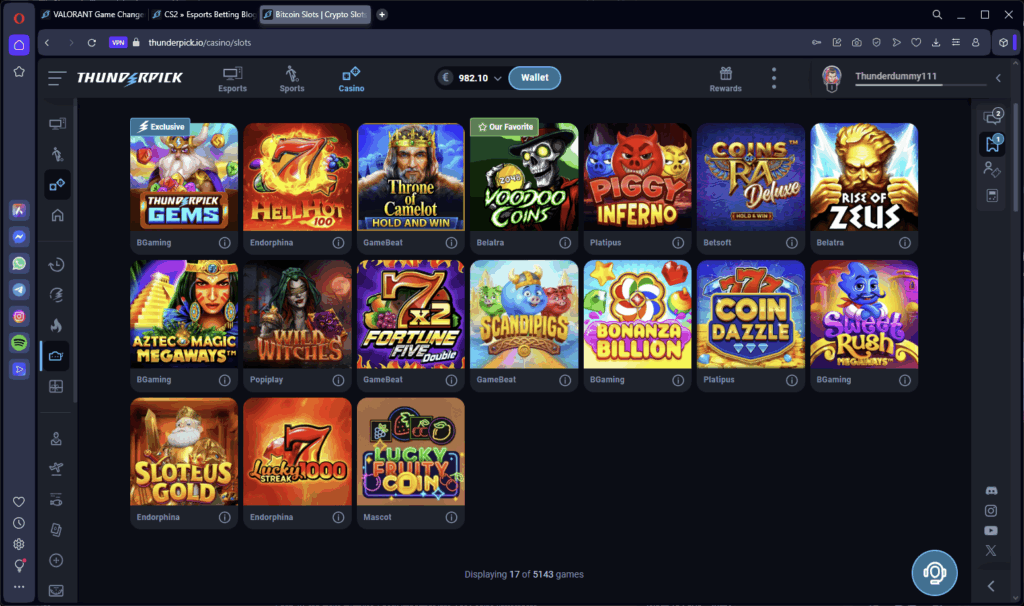
Examples Of Slot Games By Volatility Level
In the next section, we’ll explore some examples of popular slot games for each volatility level.
High Volatility Slot Examples
High-volatility slots are the most dramatic. The gameplay feels swingy, tense, and unpredictable. It slowly builds up pressure, followed by explosive payouts. Most games feature free or bonus rounds, high-value symbol combinations, multipliers, and expanding wilds that amplify the risk and reward.
| Game | RTP | Max Win Multiplier |
| Chicken Man | 96.31% | 12,500x |
| Sweet Rush Megaways | 96.69% | 12,960x |
| Mayan Book Multi Choice | 92.29% | 10,000x |
| Greek Pantheon Megaways | 96.21% | 30,000x |
| Zombie aPOPalypse | 96.01% | 20,000x |
Medium Volatility Slot Examples
With regular reward patterns, medium-volatility slots offer enough wins to keep your balance moving. Features like free spins, modest multipliers, and mid-tier bonuses also keep gameplay engaging without extended droughts typical of high-risk slot games.
| Game | RTP | Max Win Multiplier |
| Throne of Camelot | 92.22% | 2,231x |
| Scandipigs | 96.34% | 5,000x |
| Doomsday Rampage | 96.75% | 5,000x |
| Teslamania | 96.31% | 15,000x |
| Ze Zeus | 96.34% | 10,000x |
Low Volatility Slot Examples
If you’re after consistent payouts, look no further than low-volatility slots. Designed for steady gameplay, these games are far from boring. Their frequent small payouts are great for players with a limited bankroll, keeping you spinning longer.
| Game | RTP | Max Win Multiplier |
| Fortune Monkey | 97.00% | 1,500x |
| Wunderfest Deluxe | 95.81% | 430x |
| Bastet And Cats | 95.00% | 812x |
| Quick Play Candy | 96.00% | 44x |
| Slots Angels | 96.89% | 8,000x |
RTP, Volatility, And Variance: What’s The Difference?
RTP, volatility, and variance are terms that are often confused, but each describes a different part of a slot’s behavior. Let’s break it down.
- RTP (Return To Player): The long-term average a slot pays back over time. A game with a 95% RTP means that for every $100 wagered, you can expect to get $95 back on average across millions of spins. The remaining $5 is the “house edge.”
- Volatility: The frequency and size of the return in a session. It tells you how the returns are delivered. For example, higher-volatility slots offer fewer but larger payouts, whereas lower-volatility slots give frequent but smaller wins.
- Variance: Though often used interchangeably with volatility, variance actually indicates a slot’s spread, which refers to how dramatically wins and losses swing from the average. It describes how “bumpy” your payouts can be over time, even if the RTP and volatility don’t change.
Although higher RTP slots tend to have lower volatility, it’s not promised. Some slots deliberately pay back infrequently in larger chunks (rather than constant drips), as most gamblers enjoy hitting big wins. That’s why you should always consider both RTP and volatility when deciding on a slot game.
How To Analyze And Calculate Slot Volatility
Slot volatility can be derived mathematically from the odds, but you don’t have to rely on number crunching alone. Instead, you can lean on the following four simple and reliable signals to sum up a game’s risk.
1. Look At The Volatility Index
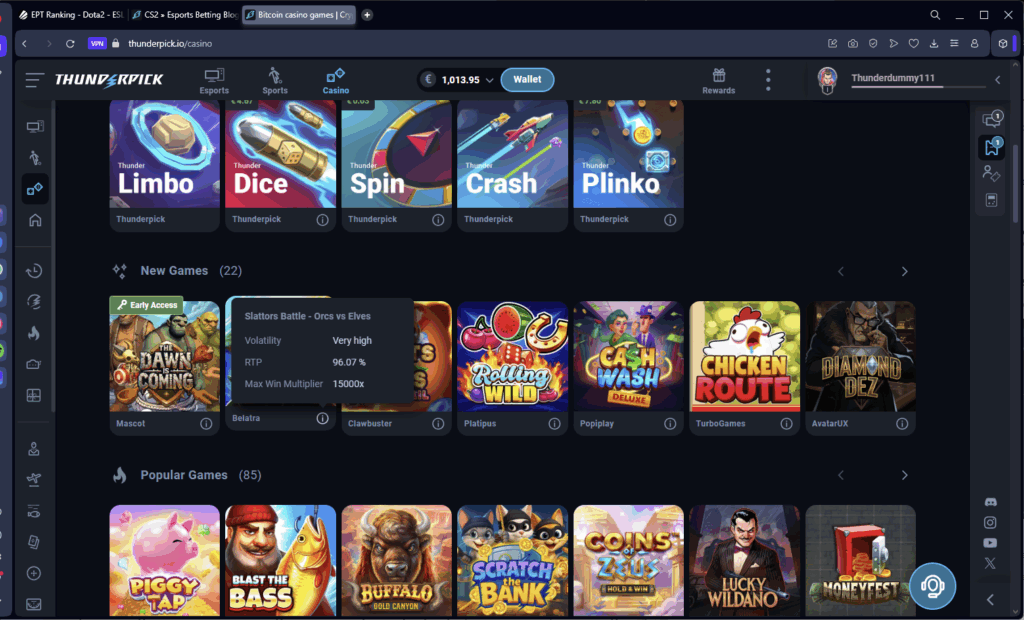
The easiest way to check a slot’s volatility index is via the game’s information or settings pages. Most developers will display it on a scale from 1 to 5 or as Low, Medium, or High. Some premium online casinos (like Thunderpick) will indicate a slot’s volatility as a simple label on the game’s tile.
2. Check The Paytable
If there’s a huge gap between payouts—like if five-of-a-kind pays 10–15x more than four-of-a-kind—that suggests you’re likely dealing with a high-volatility slot game. By contrast, smaller gaps (e.g., 3–5x differences) tend to be low-volatility due to their more even spreads.
3. Check Symbol Values
Jackpot and max bet structures are another telltale sign. If a slot game has huge prizes like the chance for you to win 5,000x or even 20,000x your bet, they’re probably on the upper end of the volatility scale. That’s because most returns are locked behind rare events, such as bonus rounds and multipliers.
4. Try Demo Play
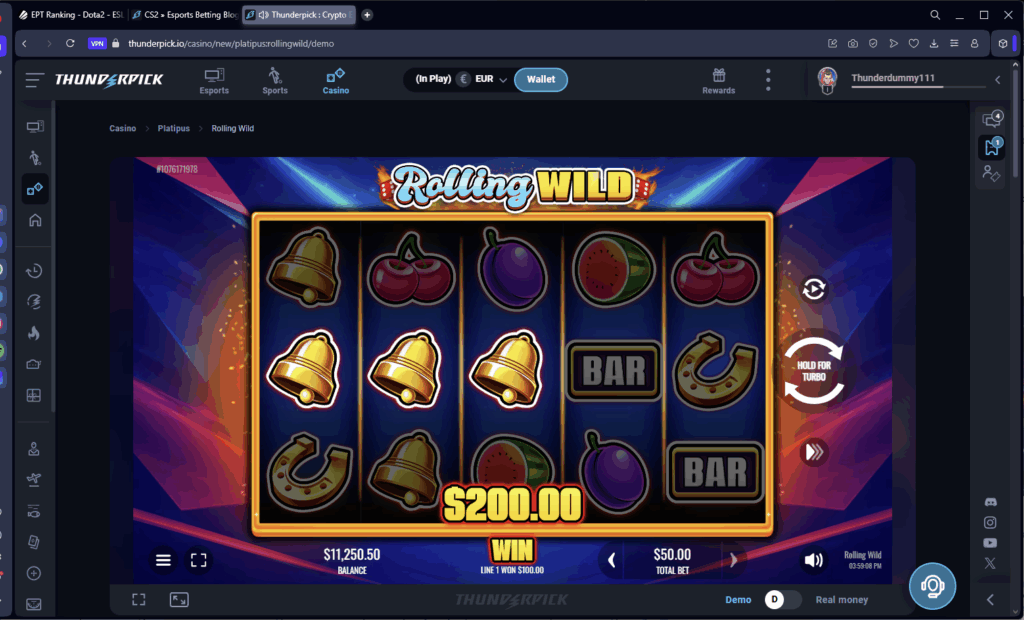
If all else fails, you can always try the demo version of the game to get a sense of a slot’s win frequency and payout. After a few spins, you should have a rough “feel” for how the game behaves, including how long it takes to hit a win and how long dry spells last.
Choosing Slot Volatility: Strategy, Bankroll, And Preferences
When it comes to choosing the right slot volatility, it really boils down to your risk tolerance and expected playtime.
If you’re a budget player or prefer more predictable play, then low-volatility slots will give you small and frequent wins to keep you spinning for longer, without outright draining your wallet.
If you’re a high-risk player who enjoys living on the edge, then high-volatility slots are your go-to. They offer enormous jackpots to match the stakes, so long as you don’t mind long dry spells. If neither suits your playstyle, then medium-volatility slots are the perfect middle ground.
But remember: volatility is only one side of the coin. RTP, bonus features, and even the game’s theme can dictate how enjoyable and rewarding the session will feel. So, choose a volatility level that suits your budget, mood, and playtime.
And whatever you decide, always adjust your bet sizes to match the slot’s risk level so your bankroll lasts as long as you need it to.

Long-Term Effects Of Volatility: What To Expect Over Time
A key point to remember is that a slot’s volatility only becomes apparent the longer you play.
High-volatility slots save most of the big payouts and jackpots for those rare moments, meaning you’ll experience long stretches of absolutely no wins before it lands. Naturally, this can be very frustrating for even experienced players, especially considering how quickly it can drain your bank balance.
On the other hand, low-volatility slots behave more steadily and will make your session feel more rewarding due to their smaller, frequent wins. In both cases, though, such patterns only emerge over hundreds (or even thousands) of spins, making it key to set realistic expectations and avoid chasing losses.
Slot Volatility FAQ
If you’re looking for a bit more clarity, the FAQs below should address any remaining questions you may have.
How Do I Find A Slot’s Volatility?
You can check a slot’s volatility in the game info section, the rules, or the paytable. Big jackpots and rarer bonuses usually mean higher volatility. On Thunderpick, you can easily view a game’s volatility by hovering your cursor over the info icon on the crypto casino slots page.
Should I Choose High Or Low Volatility Slots?
It depends on your risk tolerance and bankroll. High-volatility slots are preferred by players who enjoy the thrill of chasing big jackpots and are willing to endure large gaps between wins. By contrast, low-volatility slots are for gamblers who prefer regular payouts and longer playtime.
How Do I Adjust My Betting Strategy For Different Volatility?
If you’re playing medium- to high-volatility slots, stick to smaller bets and keep a larger bankroll to ride out the dry spells. For low-volatility games, you can set slightly larger bets due to the frequent payouts, but always keep your stake aligned to your desired playtime.
Does Volatility Affect My Actual Chances Of Winning?
No, volatility doesn’t change your odds. It only changes the frequency of wins and their payout size. Over a long enough time, your results will still always tend towards the game’s RTP, though the wins will be distributed differently.
Can A Slot Have Both High RTP And High Volatility?
Yes, but that doesn’t mean you’ll win more often. RTP tells you how much the game pays back over the long run, while volatility describes how it pays: either through many small wins or rare big ones.
Why Are Long Losing Streaks Possible Even When Playing “Safe” Slots?
Long losing streaks can still happen on “safe” low-volatility slots because every spin is random. These games pay out more frequently on average, but randomness means that anything can happen in the short run.
Always practice Responsible Gambling and check out our latest promo offers and boosts. T&Cs apply. 18+ to play.