
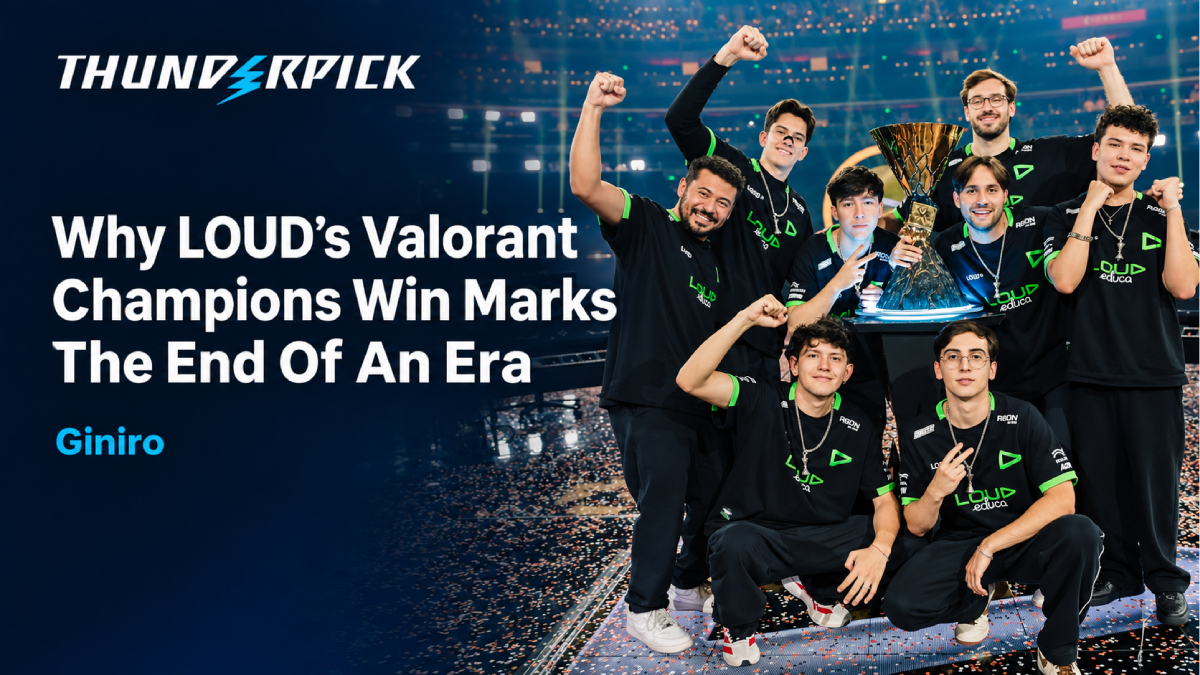
Valorant Champions 2026 was bittersweet from the get-go. Riot’s exciting April announcement that VCT would move away from league play to an open, tournament-based system made this the last trophy to be lifted under the league format. The end of an era.
The group stage consisted of four groups of four teams, each playing a double-elimination bracket, with the top two teams from each group advancing to playoffs. Americas came out strongest with a full house, with all four of its teams qualified, including defending champions NRG. Pacific followed with three teams, and EMEA managed only one. Home region China, disappointingly missed out on the playoffs entirely.
Both Americas and APAC had already found success on the global stage earlier in the year. Masters Santiago crowned Pacific’s Nongshim RedForce champions after an all-APAC final, while the most recent Masters trophy, in London, was lifted by Leviatán from the Americas region.
It’s no secret that the last few years have been rough for EMEA. The once-dominant region has lifted trophies at Masters Berlin (Gambit), Champions Berlin (Acend), Masters Copenhagen (FPX), LOCK//IN São Paulo and Masters Tokyo (Fnatic). It has now gone more than three years without a trophy, playing a style that struggles to keep up with the aggression other regions excel in.
Old Guard vs New Guard
This year’s grand final shaped up to be the old guard vs the new. Vitality boasted veterans Derke, Chronicle and Jamppi. LOUD fielded four young rookies in their first year of tier one competition, alongside Lukxo, who himself has only been competing in VCT Americas since 2025 and is at the ripe old age of 19.
Despite the experience and star power on their roster, Vitality had not delivered the performances expected of them this year. They missed out on Masters Santiago after a poor Kickoff. Their best results were winning EMEA Stage 1 and placing 4th at Masters London. After that, they dropped out of the EMEA Stage 2 playoffs in the first round and qualified for Champions on points. The team was dubbed a “superteam” at the start of the year, which in esports is the equivalent of cursing a team.
At Champions, however, Vitality bested LOUD 2-0 in the group stage, winning both Ascent and Summit. They moved through the rest of the competition undefeated until meeting LOUD again in the upper bracket final. There, Vitality lost the deciding map, which sent them to the lower bracket final, where they beat 100 Thieves 3-1 for the rematch against LOUD in the grand final.
LOUD came into the event as the second seed after losing the VCT Americas Stage 2 final to 100 Thieves, the same team that had knocked them out in the first round of the lower bracket in Stage 1. They hadn’t made it to a global event yet in 2026, and then they tasted defeat early on in their second match at Champions.
Their lack of experience on the global stage and their young roster raised questions about whether they could control their nerves in front of a crowd and bounce back. The answer to that was quickly shown. After that loss to Vitality, they found their footing and went on a dominant run through the rest of the competition, which included sending title defenders NRG to the lower bracket in the upper semi-final, with a 13-3 demolition on Summit.
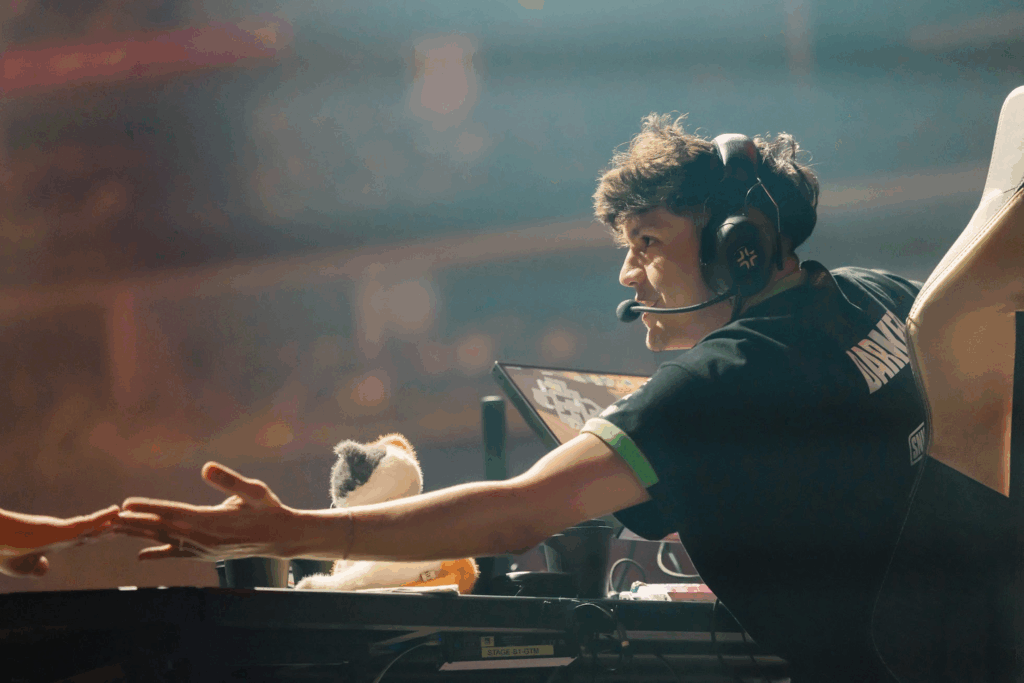
Ft. Colin Young-Wolff/Riot Games
The Grand Final
By beating Vitality in the upper final, LOUD earned the double map veto advantage. An uphill battle for Vitality as LOUD set themselves up for success by banning Ascent and Split – Ascent in particular was a map LOUD had yet to find a win on this tournament.
LOUD secured the first map, Summit, by a fine margin of 13-11. This was the same map Vitality had beaten them on in the group stage. Erde’s Sage proved to be the difference, a reminder that he is simply the best Sage in the world on Summit. Vintage Derke made an appearance on Lotus with a phenomenal Raze performance, allowing Vitality to level the series with a 13-8. Tzkin took that personally: his 385 ACS game on Neon closed out Sunset for LOUD very quickly with a 13-5 scoreline. Haven was do-or-die, the potential equaliser for Vitality, but also the map that could close it out for LOUD.
Vitality arguably understood the stakes better than anyone, with a roster of veterans who had been in this position before. These were players who had come close and tasted defeat, but who were also no strangers to the euphoria of lifting international silverware. As LOUD reached double digits, that understanding seemed to give Vitality the fuel they needed to close the gap. They brought the scoreline from 12-7 to 12-10, taking three rounds back to back, and needed only two more to force overtime. In true EMEA fashion, Vitality made us believe. They gave their fans hope that a map five was possible, that this was not it.
Strike after strike, LOUD proved that the new generation is not here to wait its turn and play by the rules. They are here to take the fight forward, to be aggressive, and to play a Valorant that embodies players who have grown up with this game. Ultimately, the veterans of Vitality could not match them.
In the final round, Derke found the opening pick on Darker, giving Vitality the numbers advantage on Haven’s defence. That didn’t stop LOUD from overwhelming C site with everything they had and securing the plant. It left a 3v3, and Lukxo took a risk, pushing up aggressively to catch the Vitality players rotating from A. One after another, the Vitality players fell, and LOUD secured the Champions 2026 title with a playstyle that was aggressive, risky and calculated.
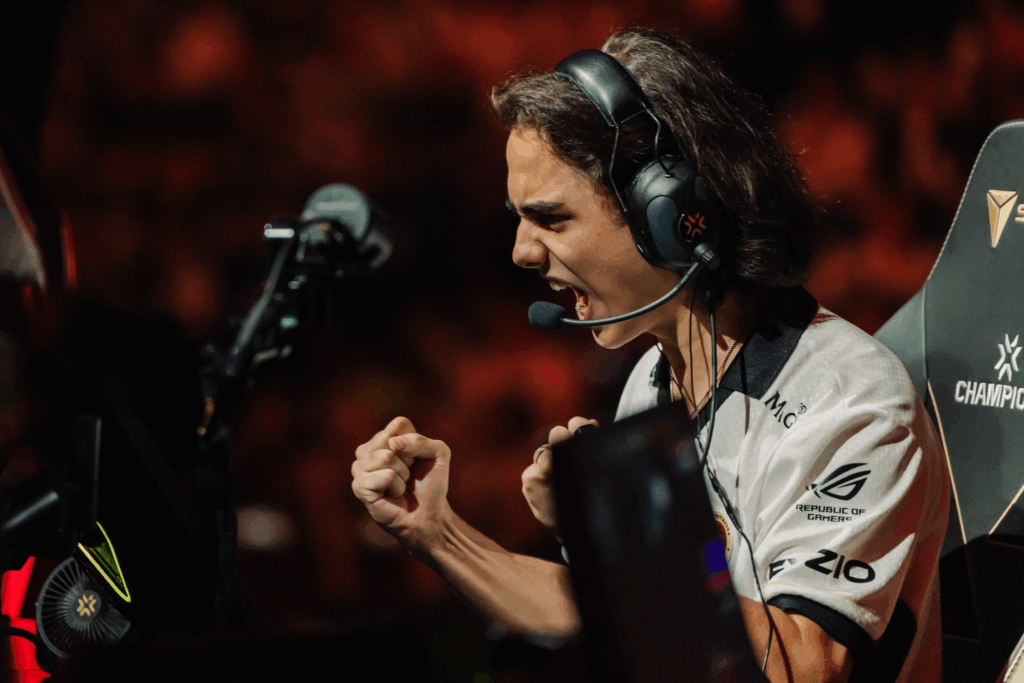
Ft. Colin Young-Wolff/Riot Games
The Future
LOUD’s Erde was crowned MVP of Valorant Champions 2026. He joined the organisation in March this year after turning 18, coming straight from the Leviatán academy, where he had dominated tier two for years. His Sage on Summit was nothing short of excellent. His in-game leadership, the best in the world. It is fascinating to see him excel at such a young age showing just how well-rounded a player he already is, especially given that it came under the pressure of his first global stage and against players he practically grew up watching.
Four years after LOUD’s first Champions title in 2022, a completely new generation has lifted the trophy for the organisation. Their win highlights the viability of the open system Riot is moving to in 2027, and a roster built on tier two rookies winning it all feels like the perfect way to usher in the new era.
I believe this marks the end of the old guard and the rise of a quicker, more aggressive Valorant, played by a generation who grew up on this game alone. For them, split-second decision making is second nature. Many of the veterans came to Valorant from Counter-Strike, carrying its muscle memory and habits with them. These players never had to unlearn anything. They learned Valorant by playing it, not by translating it from another game. The old guard speaks Valorant fluently; the new guard speaks it as a native language.Vitality’s comeback on Haven showed that experience still counts for something, but in the end, instinct beats memory.
Always practice Responsible Gambling and check out our latest promo offers and boosts. T&Cs apply. 18+ to play.